


The Small Animal Hospital Dermatology Service is responsible for treating a wide range of common dermatological conditions.
How we can help
We treat a wide range of common dermatological conditions, including:
- Allergic reactions (atopic dermatitis, insect allergies)
- Infectious diseases (parasites, bacteria, fungi, viruses, …)
- Conditions affecting the ears
- Autoimmune or immune-mediated diseases (pemphigus, lupus, …)
- Hormonal diseases (if the main symptoms are dermatological)
- Hair-loss disorders
- Other dermatological diseases: claw diseases, skin tumours, pigmentation and keratinisation disorders, diseases of anal sacs, …
Diagnostic and Therapeutic Procedures We Offer:
- Skin scrapings, cytologies, trichograms, Wood's lamp analysis and biopsies
- Allergy testing and immunotherapy service, including subcutaneous, sublingual, intralymphatic and one-day induction protocols
- Video-otoscopy
- Fecal Microbiota Transplantation (in planning)
- Co2 Laser (in planning)
- Diagnosis, treatment, and prevention of allergies caused by bee and wasp stings
Immunotherapy for Bee and Wasp Allergy
What is an Insect Venom Allergy and How Can It Be Recognized in Dogs?
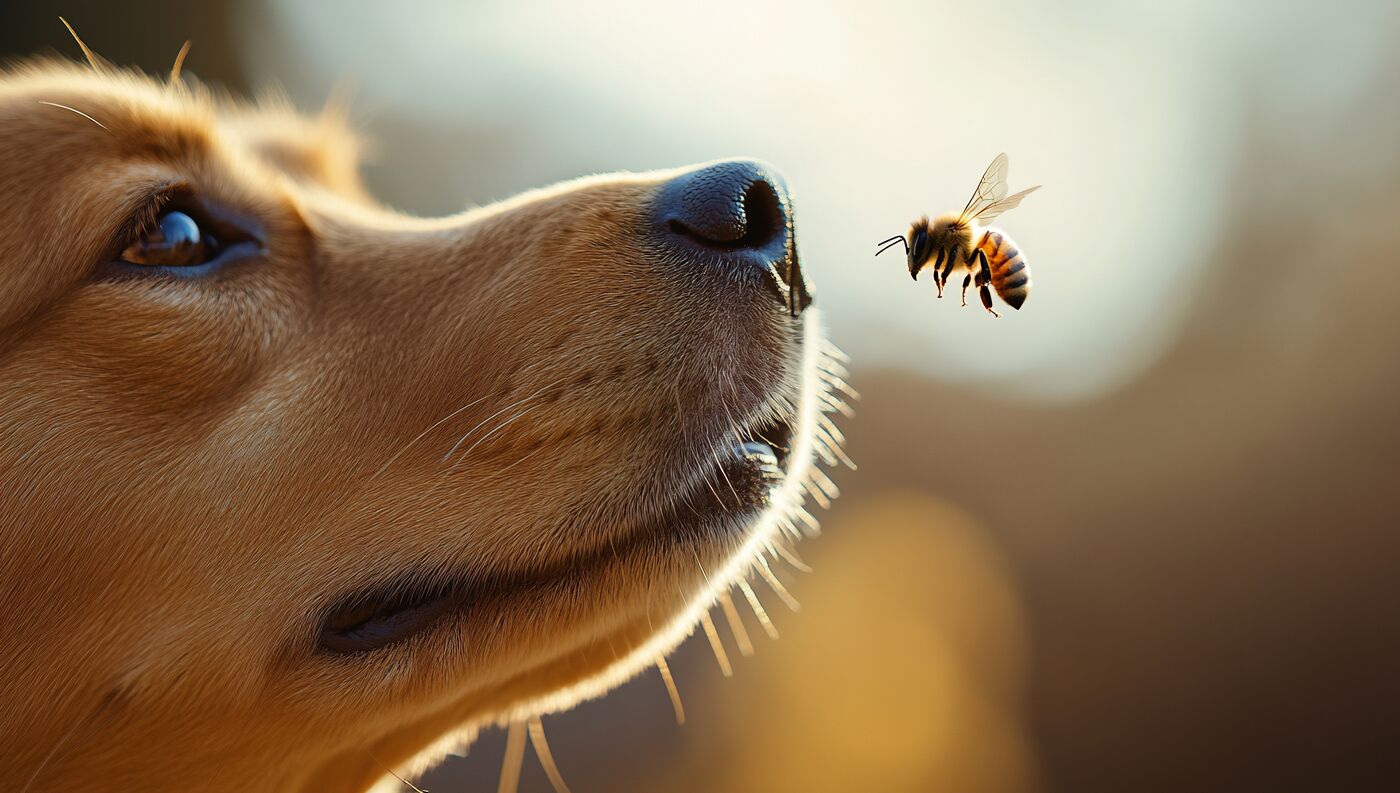
An allergy to insect venom is one of the most frequent life-threatening reactions in dogs as previously shown by our work. Dogs may experience severe allergic reactions, especially to the venom of bees, wasps, and bumblebees. Symptoms range from skin redness and swelling to severe reactions such as breathing difficulties, vomiting, diarrhea, circulatory collapse, and even loss of consciousness or death. These reactions usually occur within minutes of the sting.
Reference:
Triggers, risk factors and clinico-pathological features of urticaria in dogs - a prospective observational study of 24 cases - Link
Bee and Wasp (Venom) Immunotherapy (VIT): Effective Protection Against Anaphylaxis
Our clinic is one of the few facilities worldwide that offers venom immunotherapy (VIT) for dogs. This therapy is currently the only approach to prevent repeated anaphylactic reactions after insect stings. VIT gradually acclimatizes the dog's immune system to the insect venom, greatly reducing the likelihood of a recurrent severe reaction.
Is There Scientific Data on the Efficacy and Safety of Venom Immunotherapy in Dogs?
Studies show that bee and wasp venom immunotherapy is highly in dogs. A study conducted by Prof. Ana Rostaher found that all dogs after undergoing VIT were 100% protected. Tolerability is also very good, with no serious side effects observed.
References:
- Hymenoptera Venom Immunotherapy in Dogs: Safety and Clinical Efficacy - Link
- Venom immunotherapy for Hymenoptera allergy in a dog - Link
What is the Risk That My Dog Will Again Experience a Severe Allergic Reaction After Being Stung by a Bee or Wasp?
We conducted a study analyzing over 170 dogs with allergic reactions to bee or wasp stings. Almost two-thirds of patients with severe reactions experienced the same or worse symptoms after subsequent stings. Unfortunately, also over 60% of patients with mild local reactions develop severe allergic reactions when stung again. These findings strongly support the recommendation of venom immunotherapy (VIT) for patients with insect venom allergy.
Reference: Natural History and Risk Factors of Hymenoptera Venom Allergy in Dogs - Link
How Long Should the Therapy Be Carried Out?
The therapy should be continued for at least five years to ensure the development of long-lasting tolerance. For high-risk patients who frequently come into contact with bees or wasps, we recommend continuing the therapy for life.

Venom (Bee,Wasp) Immunotherapy Procedure at the Glasgow Small Animal Hospital
1.First Appointment and Allergy Testing (Online or Onsite)
During this appointment, the owner is informed about the condition, the allergy testing procedure, and VIT therapy. In addition, owners receive an "anaphylaxis emergency kit" and detailed instructions on how to use it. If the owner wishes to proceed with VIT, it is important that allergic hypersensitivity to insect venom is confirmed by blood allergy tests. The results of the allergy test are usually available within two weeks. Once the results are available, immunotherapy can begin.
This first assessment appointment can also be made online, and the blood testing and emergency drugs can be initiated by the referring vet.
2.Venom Immunotherapy Induction (Onsite with Us)
In this phase, small incremental doses of the offending allergen are injected under the skin at intervals of 20-30 minutes. The dogs are continuously monitored during this time so that any side effects can be addressed immediately. This process helps the body develop a tolerance, reducing or completely eliminating allergic symptoms. A total dose equivalent to 1 to 2 insect stings (100 µg) is injected. This treatment takes place over two days, 1 to 7 days apart. On the first day, the patient stays with us for about 3-5 hours, and on the second day for only 2 hours. For patients who have to travel a long distance, we conduct this phase on two consecutive days, making the process much easier and less time-consuming for the owners, as they can stay overnight close to our clinic and return for the second injection the next day.
3.Maintenance Phase (With the Referring Vet or With Us)
Three weeks after completing the induction phase, 100 µg of the allergen is injected under the skin once a month. These injections can also be administered by your vet. Each year, the interval is extended by two weeks until the maximum injection interval of three months is reached.
4.Checking VIT Effectiveness – Provocation Test with Live Insects
After six months of VIT, we perform a controlled bee or wasp sting to evaluate the effectiveness of the therapy, if the owners wish or if the patient did not experience a field sting. For this test, the patients receive intravenous access (if medication is required) before the sting and are closely monitored during this examination. This test procedure is safe, with no reports of fatal reactions to this test in either humans or dogs. We tested already several dogs, without any side effects. Owners are often very relieved after a positive provocation test and report an improved quality of life.
Who We Treat
Appointments can be scheduled directly for dogs and cats. For other species, including horses, farm animals, pets, and exotic animals, an appointment must be arranged with the relevant species-related department. We will be then consulted by our colleagues as necessary.
Dermatology Questionnaire
Complete and return the Dermatology Questionnaire 24 hours before your visit. We will also receive data from your veterinarian, so don’t worry if you can’t recall every detail.
Sedation or Anaesthesia
If your pet requires sedation or anaesthesia, please do not feed them after midnight the night before the appointment. Water is allowed. Inform us of any medications your pet is taking for other health issues, so we can coordinate with our anaesthesia team.
Bathing
If possible, refrain from using medicated baths for one week prior to the appointment.
Ear Medication
Discontinue ear cleaners and medications at least 1-3 days before the visit, if possible.
Intradermal Allergy Testing
This test may require mild sedation, shaving a 20x20 cm area on the chest, and injecting approximately 20 allergenic extracts. Results can be interpreted after 20-30 minutes. To ensure accurate results, please discontinue specific medications as follows:
- Long-acting glucocorticoids: 6 weeks
- Oral glucocorticoids: 4 weeks
- Topical glucocorticoids (ear and eye drops): 1-2 weeks
- Antihistamines: 1-2 weeks
- Oclacitinib and similar products: No withdrawal needed
- Lokivetmab: No withdrawal needed
During the Exam
We will review your pet's history and conduct a thorough examination. Initial samples may be taken, such as skin scrapings and impression smears, which will be analyzed immediately. For more complex cases, we may schedule a follow-up appointment for additional tests and procedures (e.g., ear flushing, skin biopsy, allergy testing).
After the Exam
You and your referring veterinarian will receive a detailed report of the visit within 24 hours via email. For challenging or chronic cases, we can arrange a follow-up at an appropriate time or maintain digital communication with you and your veterinarian.
Meet the team
Professor Ana Rostaher BVMS PD Dipl. ECVD
European Recognised Specialist Dermatology
Ana graduated from the Slovenian Veterinary School in Ljubljana in 2002. She worked for several years in a small animal practice in Slovenia, initially as an employee and later as a co-owner. Following this, she completed an internship at the University of Veterinary Medicine in Vienna, followed by a three-year dermatology residency at the University of Veterinary Medicine in Munich. In 2011, she received her diploma from the European College of Veterinary Dermatology.
Ana then worked for two years as an animal dermatologist in the Paris region before moving to Switzerland, where she has served as a senior clinician, researcher, and lecturer at the Vetsuisse Faculty in Zurich for 12 years. In 2025, she joined Glasgow University as a Professor of Veterinary Dermatology. Her main fields of interest include canine atopic dermatitis, feline allergies, allergies to bees and wasps, alopecia, precision medicine, One Health, and more.
She enjoys spending her free time with family and friends, especially her 8-year-old daughter Lidia. She loves being spontaneous and creative, and her hobbies include horseback riding, gardening, reading, and ice bathing. If possible, she would have a small farm with a few goats to milk and make her own cheese.
Special interests include:
- Allergies and hair loss disorders
- Complex cases
- Equine and farm animal dermatology
- Dermatohistopathology
- One health, Precision medicine
- Faecal microbiota transplantation


Want to Participate in a Clinical Study?
We invite pet owners to join us in our ongoing clinical studies focused on allergies, as we strive to find effective solutions for pets that are not well-controlled. Despite our advancements, the search for the "golden bullet" for allergic conditions continues, and your participation can make a significant difference in improving the lives of affected animals.
Additionally, we are excited to explore ways to prevent allergies in young puppies, contributing to a healthier future for our furry companions. As soon as we are ready to launch these studies, we will announce the details on our website and through other media channels.
Your involvement can help us advance veterinary medicine and enhance the quality of life for pets everywhere. Thank you for considering participation in our research efforts!
Requirements for referral
Please complete the online referral form detailing history and clinical signs. A thyroid and renal profile is strongly advised before referral.